|
 Scientific Classifications explained » Amphibians » Ants » Aphids » Bees » Beetles » Birds » Bugs » Butterflies » Caterpillars » Damselflies » Dragonflies » Earwigs » Flies » Frog/Leafhoppers » Fungi » Galls » Grasshoppers » Harvestmen » Hoverflies » Lacewings » Ladybirds » Leaf Mines » Lichens » Mammals » Millipedes » Mosses » Moths » Sawflies » Slugs » Snails » Spiders » Trees & Shrubs » Wasps » Wild Flowers » Woodlice » Postboxes |
UK Nature > Trees & Shrubs > Corylus avellana (Common Hazel)
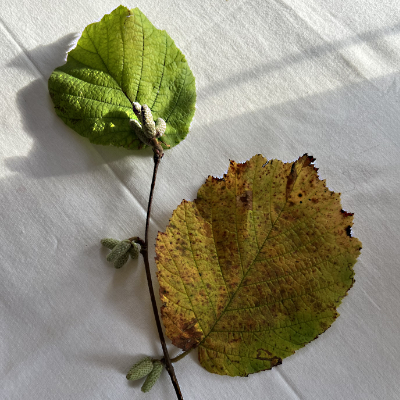
Scientific Name: Corylus avellana Common Name: Common Hazel Corylus avellana, more commonly known as Common Hazel, is often coppiced, but when left to grow, trees can reach a height of 12m and live for up to 80 years (if coppiced, hazel can live for several hundred years). It has a smooth, grey-brown, bark, which peels with age, and bendy, hairy stems. The leaf buds are oval, blunt and hairy; the leaves themselves are round to oval, doubly toothed, hairy, pointed at the tip (although this is not a definitive feature - they can often have a rounded end) and turn yellow before falling in autumn. They are soft to the touch as a result of the downy hairs on the underside. Small, green catkins can be present in autumn (see photo). It can be dentified in autumn by its nuts, which are each held in a short, leafy husk which encloses about three quarters of the nut. Hazel is monoecious, meaning that both male and female flowers are found on the same tree, although hazel flowers must be pollinated by pollen from other hazel trees. The yellow male catkins appear before the leaves and hang in clusters from mid-February. Female flowers are tiny and bud-like with red styles. Once pollinated by wind, the female flowers develop into oval fruits which hang in groups of one to four. They mature into a nut with a woody shell surrounded by a cup of leafy bracts (modified leaves). |
|

https://www.uknature.co.uk is a website dedicated to showing the immense diversity of UK nature and wildlife. Our vast range of habitats, from lowland arable to snow covered mountains, from storm-ravaged coastlines to peaceful inland freshwater lakes and rivers, from dry, sandy heaths to deciduous and coniferous forests, all these habitats contribute to the abundance of UK nature. We have wild birds in huge numbers either residing or visiting our shores (597 recorded species as at July 2013) and we must also not forget the humble back garden with its grass lawns, flower beds filled with nectar rich flowers, shrubs and trees, all designed to attract huge numbers of insects such as bees, moths, butterflies and hoverflies; and finally the small ponds which provide safe havens for frogs, toads, newts and even slow worms and grass snakes. www.uknature.co.uk is the showcase for my personal passion, photographing uknature in all its glory. I sincerely hope you all enjoy the fruits of my labours. This site and all images contained therein is © Jeremy Lee 2004 - 2025. All Rights Reserved. Site design by Jeremy Lee. Site development & IT Support by Stuart Lee. |