|
 Scientific Classifications explained » Amphibians » Ants » Aphids » Bees » Beetles » Birds » Bugs » Butterflies » Caterpillars » Damselflies » Dragonflies » Earwigs » Flies » Frog/Leafhoppers » Fungi » Galls » Grasshoppers » Harvestmen » Hoverflies » Lacewings » Ladybirds » Leaf Mines » Lichens » Mammals » Millipedes » Mosses » Moths » Sawflies » Slugs » Snails » Spiders » Trees & Shrubs » Wasps » Wild Flowers » Woodlice » Postboxes |
UK Nature > Wild Flowers > Red & Pink Wild Flowers > Petasites hybridus
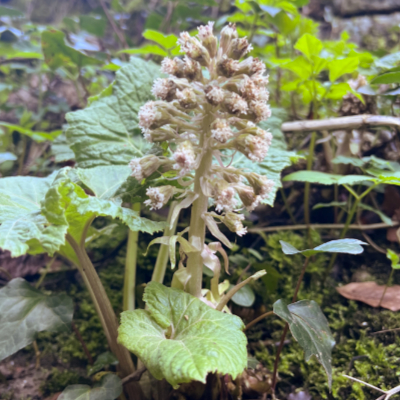
Common Name: Butterburr Scientific Name: Petasites hybridus Petasites hybridus, more commonly known as Butterbur, is a herbaceous perennial flowering plant in the family Asteraceae that is native to Europe and northern Asia. Although used over centuries in traditional medicine to treat various disorders, there are no approved medical uses, but it is sold as a dietary supplement. Concerns about the potential toxic effects of pyrrolizidine alkaloids in butterbur limit its use in human and animal studies. Butterbur may have derived from the use of leaves to wrap butter centuries ago. It is also called Bog Rhubarb, Devil's Hat, and Pestilence Wort. The species is dioecious, the male and female flowers being borne on separate plants. In Britain, the male flowers are widespread, but the female flowers have a restricted distribution in northern and central England. The flowers are produced in the early spring, before the leaves appear. They are pale pink, with several inflorescences clustered on a single stem. The round leaves are large, on stout, tall stems. It is native to central Europe, extending from the British Isles to the Caucasus, and from southern Italy to southern Scandinavia. It is present as an introduced species in North America. In the British Isles, female plants are rarely found outside central and northern England and the species may be naturalized as clonal populations outside this area, propagating via rhizome fragments. The preferred habitats are moist, fertile soils often by rivers, streams, and in wet meadows. |
|

https://www.uknature.co.uk is a website dedicated to showing the immense diversity of UK nature and wildlife. Our vast range of habitats, from lowland arable to snow covered mountains, from storm-ravaged coastlines to peaceful inland freshwater lakes and rivers, from dry, sandy heaths to deciduous and coniferous forests, all these habitats contribute to the abundance of UK nature. We have wild birds in huge numbers either residing or visiting our shores (597 recorded species as at July 2013) and we must also not forget the humble back garden with its grass lawns, flower beds filled with nectar rich flowers, shrubs and trees, all designed to attract huge numbers of insects such as bees, moths, butterflies and hoverflies; and finally the small ponds which provide safe havens for frogs, toads, newts and even slow worms and grass snakes. www.uknature.co.uk is the showcase for my personal passion, photographing uknature in all its glory. I sincerely hope you all enjoy the fruits of my labours. This site and all images contained therein is © Jeremy Lee 2004 - 2025. All Rights Reserved. Site design by Jeremy Lee. Site development & IT Support by Stuart Lee. |